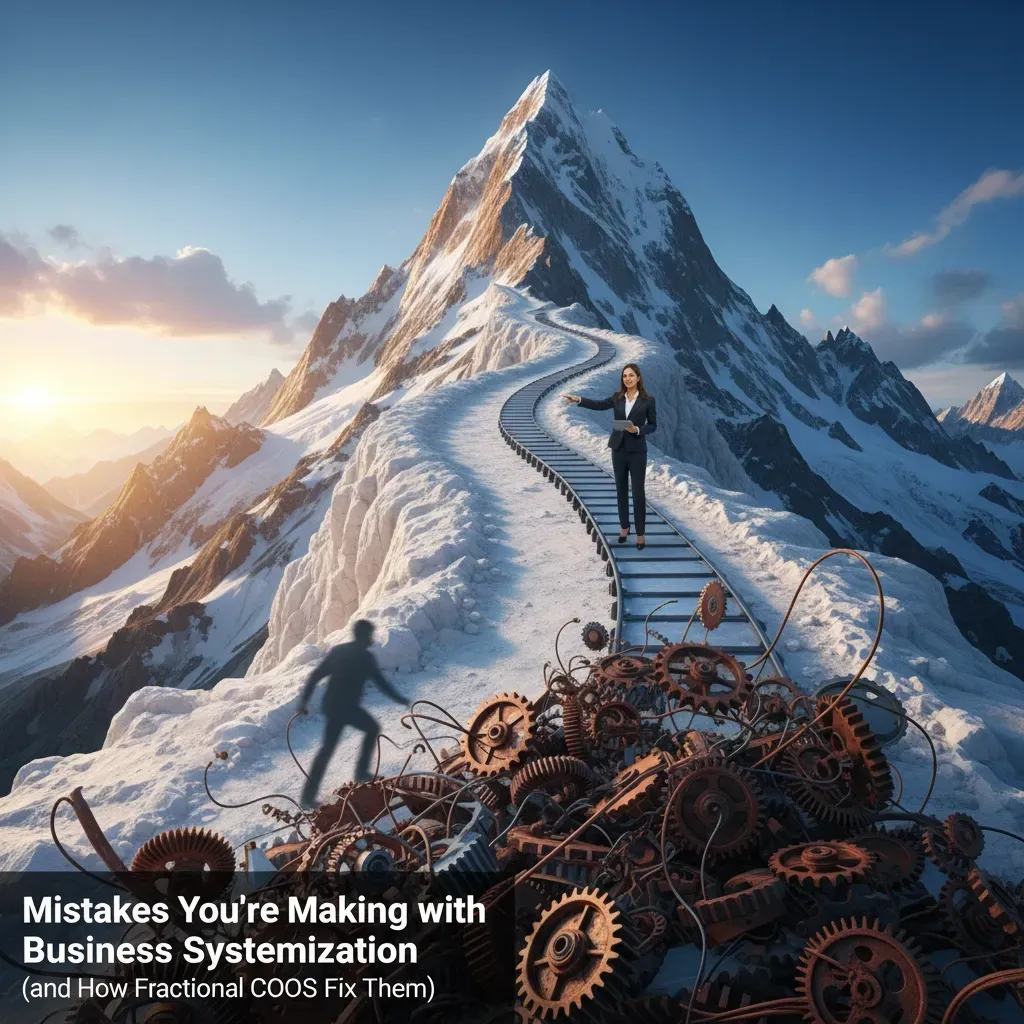
Mistakes You're Making with Business Systemization (and How Fractional COOs Fix Them)
You know your business needs better systems. You've read the books, attended the webinars, and maybe even started documenting a few processes. But somehow, systemization keeps falling flat. Sound familiar?
Here's the thing: most business owners approach systemization with the best intentions but make critical mistakes that sabotage their efforts. The result? Wasted time, frustrated teams, and systems that look good on paper but don't work in the real world.
Let's dig into the seven most common systemization mistakes: and how fractional COOs help businesses get it right.
The 7 Systemization Mistakes That Kill Results
1. Building Systems Without Strategic Direction
This is the big one. Too many businesses jump straight into documenting processes without asking the fundamental question: "What are we actually trying to achieve?"
If you don't have a clear five-year vision or well-defined business objectives, your systems will lack direction. You'll end up creating processes that technically function but don't drive meaningful business value. It's like building a beautiful road that leads nowhere.
Without strategic clarity, systemization becomes busy work instead of business building.
2. Forcing One-Size-Fits-All Solutions
Here's a mistake I see constantly: business owners find a system that worked for another company and try to copy-paste it into their business. This never works.
Your business is unique. Your team, culture, goals, and challenges are different from everyone else's. Generic, off-the-shelf systems create friction because they don't align with how your business actually operates.
The result? Low adoption rates, workarounds, and eventually, abandoned systems.

3. Skipping the Documentation Step
"We don't need to write it down: everyone knows what to do."
Famous last words.
When processes live only in people's heads, your business becomes hostage to individual employees. What happens when someone takes vacation? Gets sick? Quits? Their knowledge walks out the door with them.
Documentation isn't just about creating manuals: it's about creating consistency, reducing training time, and protecting your business from key person dependency.
4. Trying to Systematize Everything at Once
Ambitious business owners often make this mistake: they try to document every single process simultaneously. The result? Overwhelmed founders, incomplete systems, and nothing actually getting implemented.
Smart systemization is incremental. Start with processes that happen frequently and create the most friction. Build confidence with small wins before tackling complex operations.
5. Ignoring Metrics and Accountability
Systems without metrics are just suggestions. If you can't measure whether your system actually works, how do you know it's creating value?
Many businesses create detailed process documents but forget to include:
Performance standards
Key metrics
Regular review cycles
Clear accountability
Without quantifiable outcomes, you're flying blind.
6. Neglecting Training and Change Management
Creating a brilliant operations manual means nothing if your team doesn't know how to use it: or worse, doesn't want to use it.
Training isn't a one-time event. It's an ongoing process that requires:
Clear expectations
Regular monitoring
Course corrections
Continuous reinforcement
Most businesses nail the "create" phase but fail during the "sustain" phase.

7. Perfectionism Over Progress
Some business owners get stuck trying to create the "perfect" system before implementing anything. They spend months refining processes that have never been tested in the real world.
Here's the truth: no system is perfect from day one. The goal is to create something good enough to start, then improve through iteration. Progress beats perfection every time.
How Fractional COOs Fix These Problems
Now, let's talk solutions. Fractional COOs bring specialized expertise in operational excellence: without the full-time executive price tag. Here's how they address each of these systemization challenges:
Strategic Clarity First
A fractional COO starts by working with your leadership team to translate big-picture goals into practical, step-by-step plans. They protect your vision by creating business structures that support it, rather than requiring you to constantly defend or explain it.
This creates room for your vision to breathe while systems handle the day-to-day operations.
Customized System Design
Instead of pushing generic solutions, fractional COOs audit your existing processes, identify inefficiencies, and design systems tailored to your specific context. They recommend tools that actually fit your ecosystem rather than forcing square pegs into round holes.
Implementation Excellence
This is where fractional COOs really shine. While many consultants are great at creating strategies, fractional COOs excel at execution. They lead initiatives from planning through completion, guide teams through transitions, and manage change effectively.
Consistent follow-through is what separates successful systemization from failed initiatives.

Phased Approach
Fractional COOs prioritize systemization efforts on high-impact processes first. They focus on operations that happen frequently and create the most friction, avoiding the trap of trying to systematize everything simultaneously.
This phased approach builds team confidence and demonstrates quick wins before tackling complex operations.
Data-Driven Results
Fractional COOs build quantifiable metrics into your systems from day one. They track progress with real data, review results regularly, and ensure the team stays aligned on priorities.
This data-driven approach proves system value and enables continuous improvement.
Sustainable Change Management
A fractional COO doesn't just create systems: they ensure adoption. They develop training programs, monitor compliance, and provide ongoing support to ensure systems stick.
They understand that the "sustain" phase is often the hardest, where most organizations struggle after initial implementation.
The Hidden Cost of Poor Systemization
Here's something most business owners don't realize: inefficient operations silently drain 20-30% of revenue from most companies. Poor systemization creates hidden costs through:
Duplicated efforts
Miscommunication
Quality inconsistencies
Employee frustration
Customer service issues
Missed opportunities
Fractional COOs help uncover these hidden operational costs and streamline workflows. The result? Founders typically reclaim 10+ hours per week that can be redirected toward strategic growth or leadership.
When to Consider a Fractional COO
The fractional COO model offers several advantages over traditional hiring:
Speed: You can typically start within days rather than months
Lower risk: The financial commitment is significantly less than full-time executives
Flexibility: If priorities shift, adjustments are straightforward without costly exit processes
This approach works especially well for:
Founder-led teams transitioning to structured, scalable systems
Companies experiencing rapid growth that requires operational infrastructure
Businesses managing specific high-impact projects like system upgrades or integrations
Organizations that need executive-level operational expertise without full-time overhead

Getting Systemization Right
Whether you tackle systemization internally or work with a fractional COO, success comes down to three key factors:
Strategic alignment: Every system must serve your bigger business goals
Consistent execution: Implementation matters more than perfection
Sustained discipline: The ability to maintain improvements over time
The companies that nail systemization don't just create better processes: they build competitive advantages that compound over time.
Ready to stop making these systemization mistakes? The first step is getting clear on where you stand today. Consider taking our Obvious Choice Scorecard to identify which operational areas need attention first.
Because here's the truth: every day you delay proper systemization is another day your business operates below its potential. And in today's competitive market, that's a luxury most companies can't afford.

